
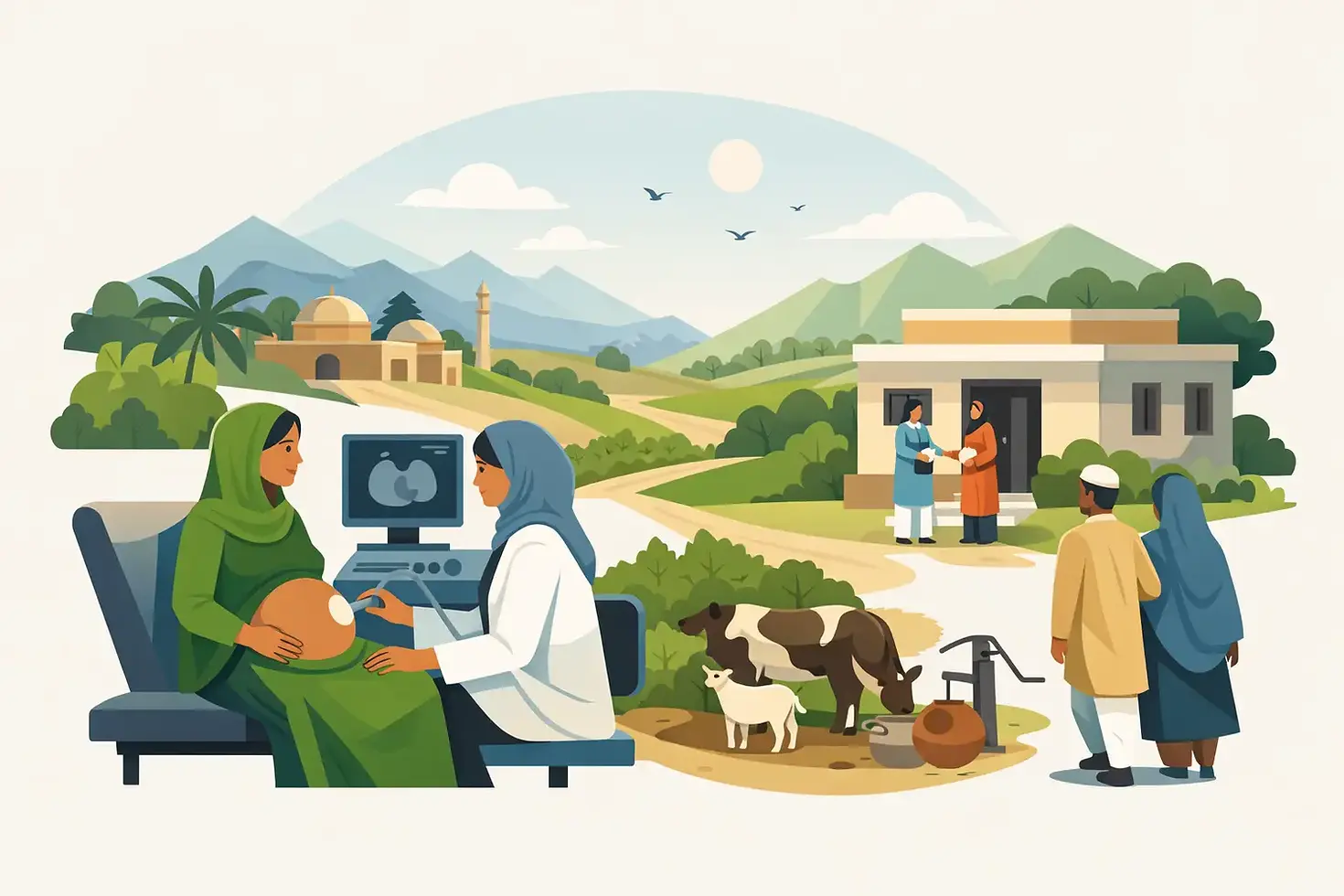
Safe Childbirth in Rural Pakistan Starts Nearby
A labor pain that begins before sunrise can become a race against distance. For families seeking safe childbirth in rural Pakistan, the question is often not whether they want skilled medical care. It is whether they can reach it before a mother or baby is in danger.
In rural communities, pregnancy may be supported by family, faith, and deep resilience. But resilience should never be mistaken for access. When the nearest dependable hospital is far away, transportation is uncertain, and the cost of treatment feels out of reach, a normal delivery can turn into an emergency with devastating speed.
Why Safe Childbirth in Rural Pakistan Requires Local Care
Pregnancy and birth need more than good intentions. They require antenatal checkups that identify warning signs early, trained providers who can monitor labor, clean delivery environments, medicines and blood when complications arise, and a reliable pathway for urgent referral.
The risk is not the same for every mother. Some pregnancies appear uncomplicated until labor begins. Others carry known concerns, such as high blood pressure, severe anemia, bleeding, infection, diabetes, a previous cesarean delivery, or a baby in a difficult position. In each case, delayed care can place two lives at risk.
For a family living hours from a larger city, travel itself can be the barrier. A vehicle may not be available at night. Fuel may be unaffordable. Roads may be difficult, especially in poor weather. A woman in active labor may be asked to endure a journey that is painful, unsafe, and deeply frightening. By the time she arrives, the window for simple intervention may have closed.
That is why rural maternal health cannot be treated as a one-time awareness issue. It is an infrastructure issue. It is a staffing issue. It is an affordability issue. And, above all, it is an issue of dignity.
The Care a Mother Needs Before Labor Begins
Safe delivery starts well before the due date. Regular prenatal visits give health workers a chance to check blood pressure, test for anemia, monitor fetal growth, discuss nutrition, and recognize when a pregnancy needs higher-level care. These visits also create trust. A mother who knows where to go, whom to call, and what symptoms require urgent attention is better positioned to act quickly.
Families benefit when care includes practical birth planning. That may mean identifying transportation, setting aside emergency funds when possible, arranging for a companion, and knowing the closest facility able to provide maternal and newborn services. A plan does not remove every risk, but it reduces dangerous delays when labor becomes unpredictable.
Community education matters as well, particularly when it is respectful and rooted in local realities. Mothers and families should know that heavy bleeding, severe headache, blurred vision, fever, convulsions, persistent abdominal pain, reduced fetal movement, or labor that is not progressing can require immediate medical attention. No family should have to decide between waiting at home and taking on an impossible expense.
Skilled Birth Support Is a Matter of Dignity
A skilled birth attendant can recognize the difference between a routine labor and an emergency. They can monitor both mother and baby, practice infection prevention, respond to postpartum bleeding, assist with newborn breathing, and arrange referral when care beyond the local facility is needed.
Traditional support from relatives and trusted community members can remain meaningful during childbirth. The goal is not to dismiss that support. The goal is to ensure that compassion is paired with clinical readiness. A mother deserves familiar voices around her and trained hands available when something goes wrong.
This distinction is especially important for newborns. The first moments after birth are fragile. Warmth, clean cord care, feeding support, and prompt action when a baby has trouble breathing can shape a child’s chance of survival and healthy development. Maternal care and newborn care must be planned together because their needs are inseparable.
A Rural Facility Must Be Ready, Not Just Nearby
A building alone does not guarantee safe childbirth. A rural health facility must be equipped, staffed, supplied, and connected to referral services. It needs dependable electricity and water, infection-control practices, essential medicines, diagnostic capacity, trained nurses and clinicians, and a clear process for transferring complicated cases.
The right level of care depends on the community and the facility’s capacity. Some mothers can safely give birth at a well-prepared local unit. Others need a hospital that can provide surgery, blood transfusion, anesthesia, and advanced newborn care. What matters is honest assessment. Families should not be given false reassurance when a higher level of treatment is necessary.
Continuity also matters. A mother who receives prenatal care in one place should not be left without support after delivery. Postpartum checkups can identify bleeding, infection, depression, breastfeeding difficulties, and newborn concerns that families may otherwise manage alone. The weeks after birth deserve the same attention as the delivery itself.
Building Access That Lasts Beyond One Delivery
Charitable medical camps can bring urgently needed consultations, screenings, medicines, and referrals to communities that have been overlooked. They are an important expression of compassion in action. Yet childbirth emergencies do not follow a camp schedule. A mother may need help on any night, in any season, without warning.
That is why long-term healthcare infrastructure is essential. Rural communities need facilities that remain present, trusted, and prepared. They need systems that reduce the distance between a mother in labor and the care that can save her life.
Healing & Caring Foundation is working toward that kind of sustained access through the Malik Hameedullah Memorial Trust Hospital in Rangli, Jund, 56 miles west of Islamabad. Designed to serve an addressable population of 200,000 people, the project represents more than bricks and equipment. It represents a future in which rural families are not forced to measure medical safety by the number of miles between their home and a hospital.
Maternal health is connected to the broader strength of a local healthcare system. The same community that needs safe delivery care may also need pediatric treatment, emergency services, mobility support, chronic disease management, and dialysis access. Building a dependable hospital creates a foundation for care across a family’s lifetime, not only during one crisis.
How Direct Giving Can Protect Mothers and Babies
For donors, the need can feel personal even from thousands of miles away. Many Pakistani and Muslim American families understand the worry of receiving a late-night call about a relative who cannot reach care. They know that illness is not only a medical burden. It can bring debt, lost income, painful travel, and fear at the moment a family is most vulnerable.
Giving through Zakat and Sadaqah can help turn concern into practical support for underserved communities. The most meaningful charitable projects do not simply promise hope. They build the conditions that make hope real: accessible facilities, trained care teams, equipment, medicines, and services that families can use without being pushed further into hardship.
Transparent stewardship matters in this work. Donors deserve to understand what their giving supports and how a project is progressing. Communities deserve services designed for their actual needs, not temporary solutions imposed from far away. When support goes directly to healthcare work on the ground, every contribution becomes part of a larger effort to restore safety and dignity.
The Standard Rural Mothers Deserve
No mother should have to give birth wondering whether help will arrive in time. No father should have to choose between borrowing beyond his means and delaying a journey to the hospital. No newborn should lose a chance at life because trained care was too far away.
Safe childbirth is not a luxury reserved for families who live near major cities. It is a fundamental human necessity. With sustained investment, community partnership, and faith-guided generosity, rural Pakistan can move closer to a future where a mother enters labor with support nearby, skilled care within reach, and the confidence that her life and her baby’s life matter.


Comments