
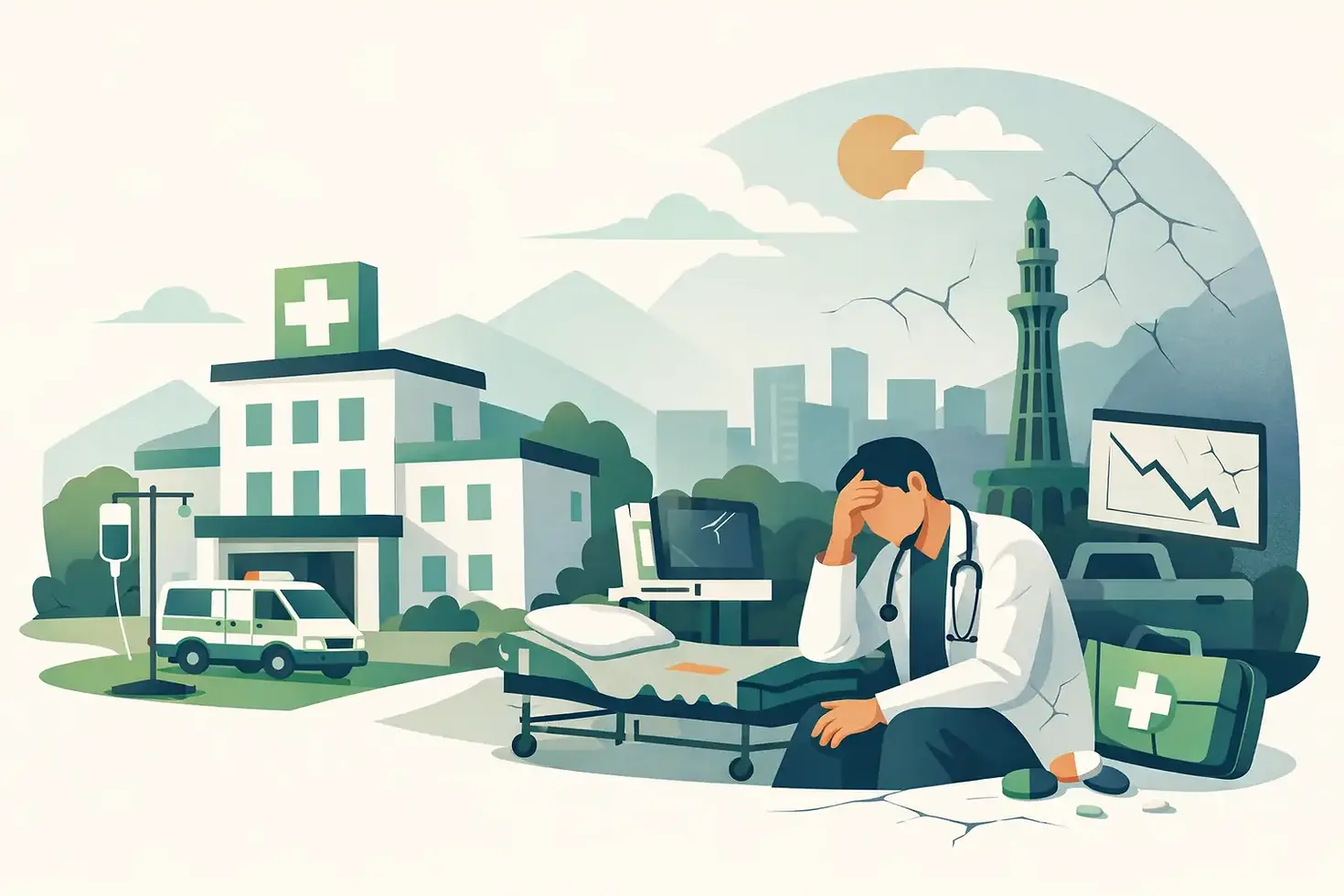
Healthcare Infrastructure in Pakistan Needs Help
For a family in rural Punjab, a medical emergency is not only a health crisis. It can become a question of distance, transportation, lost wages, and whether treatment can be afforded at all. The healthcare infrastructure Pakistan needs must bring reliable, compassionate care closer to communities that have spent too long traveling hours for services many people should be able to access nearby.
In villages around Rangli, Jund, located 56 miles west of Islamabad, the need is immediate and personal. A child needing mobility support, a mother facing complications in pregnancy, or a patient whose kidneys require regular dialysis cannot wait for a better day to seek care. They need a system that recognizes their dignity and responds before a treatable condition becomes life-threatening.
Why Healthcare Infrastructure in Pakistan Is a Rural Priority
Pakistan has talented physicians, committed nurses, and a strong tradition of families caring for one another. Yet medical resources are not distributed evenly. Major hospitals and specialist services are often concentrated in cities, while rural communities face long travel times, limited local facilities, and expenses that can place essential treatment beyond reach.
For families with limited income, a trip to a distant hospital may require more than paying a consultation fee. It may mean arranging transport, missing a day of work, finding someone to care for children, and paying for medicines or testing. When the journey must happen repeatedly, as it does for dialysis patients, the burden can become unbearable.
This is why charitable healthcare infrastructure is more than a building project. It is a long-term commitment to access. A hospital, dialysis center, medical camp, referral pathway, and trained local care team can reduce the gap between a person in need and the treatment that could protect or save their life.
The Difference Between Relief and Lasting Care
Medical camps are vital. They can provide examinations, basic treatment, medication, screenings, and a respectful point of care for people who might otherwise receive none. They also help reveal the conditions that require ongoing attention, from chronic disease to maternal health needs.
But camps alone cannot carry the full weight of rural health needs. A person diagnosed with kidney disease needs regular dialysis. A child fitted with an orthotic device needs follow-up. A pregnant mother needs continuity of care before, during, and after delivery. Long-term health outcomes depend on facilities that remain present after a single day of service has ended.
That is the purpose of building sustained local capacity. The Malik Hameedullah Memorial Trust Hospital and dialysis center in Rangli, Jund, is designed to serve an addressable population of 200,000 people. Its planned dialysis services could provide daily care for up to 200 patients, offering a meaningful alternative to repeated, expensive travel toward distant hospitals.
The work must be practical as well as ambitious. Construction milestones, medical partnerships, equipment, staffing, patient processes, and community trust all matter. A hospital cannot meet its promise simply because its walls are complete. It must be prepared to receive people with safety, skill, consistency, and compassion.
Dialysis Is Not a Service Patients Can Postpone
Kidney failure shows why proximity to care matters so deeply. Dialysis is not an occasional appointment. For many patients, it is recurring treatment that keeps the body functioning. Missing sessions can have grave consequences, yet a family living far from a dialysis unit may face travel barriers several times each week.
A local dialysis center can change the calculation. It can spare frail patients punishing journeys, reduce costs for families, and make it more realistic to maintain a treatment schedule. It cannot erase every challenge. Reliable staffing, clinical protocols, water systems, equipment maintenance, and patient affordability remain essential. Still, bringing the service closer is one of the most direct ways to restore time, stability, and hope.
Maternal, Pediatric, and Mobility Care Protect Whole Families
Infrastructure also matters before a crisis reaches its worst point. Accessible maternal care helps women seek help sooner and gives families a safer path through pregnancy and childbirth. Pediatric support can address illness, nutrition concerns, developmental needs, and injuries while children are still growing.
Mobility services carry their own powerful meaning. Through a partnership with Braceman P&O, HCF has supported a child with quadriplegia with orthotic care. That support is not merely a device or an appointment. It can help a child sit, move, participate, and experience greater comfort and dignity. It also eases part of the daily burden carried by parents and caregivers.
These needs should not be treated as secondary to hospital construction. They are the human reason construction matters. A healthcare system earns community trust when families can see that it responds to the realities of their lives.
What Responsible Giving Makes Possible
For diaspora donors, giving to healthcare infrastructure can be a deeply personal way to remain connected to Pakistan. It turns concern into a tangible resource: a patient examination, a medical camp, a hospital room, dialysis capacity, mobility support, or care for a mother and child.
The strongest charitable projects pair compassion with accountability. Donors deserve clarity about where funds are going, what has been built, which services are planned, and how the community will benefit. They also deserve to see that their generosity supports a defined need rather than disappearing into vague promises.
Healing & Caring Foundation was established around this direct-project approach. As a U.S.-based 501(c)(3) international nonprofit, it states that donations carry no overhead cost and go directly to work on the ground. For supporters seeking Zakat or Sadaqah opportunities, this model offers a faith-conscious path to help families obtain care that is urgently needed and locally rooted.
Giving is not limited to a single type of donor. Families can contribute in honor of loved ones. Professionals can offer expertise or introduce potential partners. Volunteers can help build awareness in their communities. Healthcare advocates can share the need with people who understand that a clinic, hospital, or dialysis chair can be the difference between delayed care and a life protected.
Building With Communities, Not Just for Them
A durable health project should listen to the people it intends to serve. Community members understand the roads patients travel, the costs that stop families from seeking help, and the services that are absent. Their participation strengthens trust and helps ensure that a new facility is connected to real needs rather than assumptions.
Partnerships matter for the same reason. A hospital project benefits from medical expertise, equipment planning, referral relationships, volunteer involvement, and transparent governance. Each part must work together. An ambitious facility without local trust may be underused; a caring team without reliable infrastructure may be unable to provide the level of service patients need.
There are trade-offs in every charitable health project. A medical camp can reach people quickly, while a hospital requires years of planning and construction. Equipment may allow advanced treatment, but it also requires maintenance and trained operators. The answer is not to choose urgency over permanence. Rural communities need both immediate relief and institutions that will remain when the next patient arrives.
A Practical Expression of Hope
The case for better rural healthcare is not abstract. It is found in the patient who delays treatment because the journey is too costly, the family searching for a dialysis option, and the parent hoping a child can receive support closer to home. These are not problems that should be accepted as ordinary.
A gift of Zakat, Sadaqah, or charitable support can help turn compassion into care that people can reach. It can help create a future in which a rural family is met not with distance and uncertainty, but with a nearby place of healing, skilled treatment, and the simple reassurance that their lives matter.


Comments