
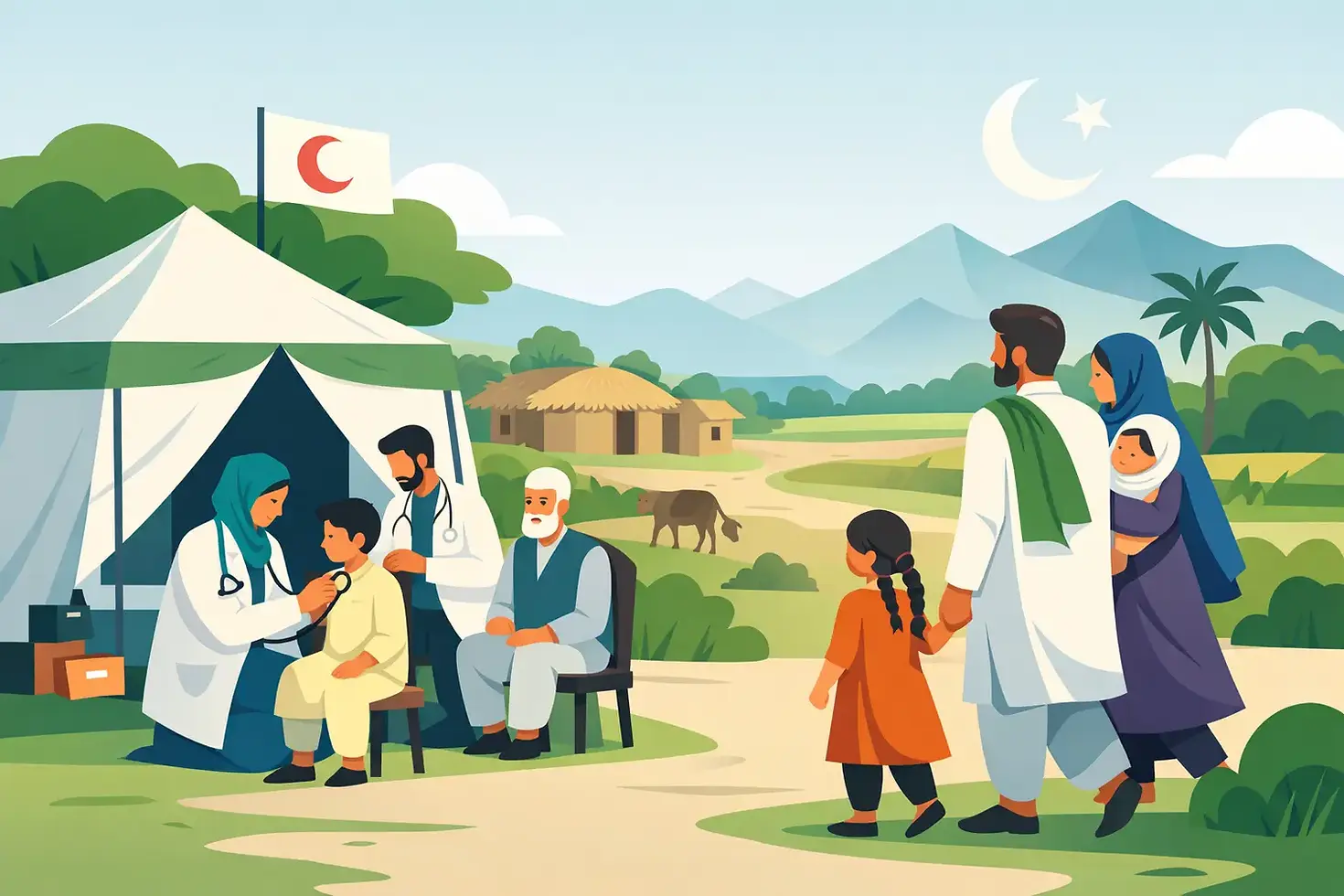
Free Medical Camps Pakistan for Rural Families
For many rural families, free medical camps Pakistan are not a convenience. They are the day a child’s illness is finally examined, a mother receives care without choosing between treatment and household necessities, or an older patient learns that pain and limited mobility do not have to be accepted as normal.
Across communities where hospitals can be hours away and private treatment is beyond reach, a medical camp brings care into the place where people live. It shortens the distance between suffering and support. It also gives families something just as vital as medicine: the assurance that their health, safety, and dignity matter.
Why Free Medical Camps Matter in Rural Pakistan
A trip to a hospital is rarely just a trip for a family in an underserved village. It can mean arranging transportation, losing a day’s wages, finding someone to care for children or livestock, and paying for tests and prescriptions after finally reaching a doctor. When a condition requires repeat visits, those barriers become even more severe.
Free medical camps respond to this reality with practical, immediate care. Physicians, nurses, volunteers, and partners can provide consultations, screenings, basic medicines, referrals, and health education close to home. For patients who have delayed treatment because of cost or distance, that first consultation may reveal a condition that needs urgent follow-up.
The value of a camp is not measured only by the number of people seen in a day. It is seen in the mother who can ask questions about her child’s persistent fever, the laborer whose injury is assessed before it worsens, and the elderly patient who receives guidance for managing diabetes or high blood pressure. Small interventions can prevent larger crises when they happen early enough.
Care That Respects the Whole Person
Medical need is often visible, but its effects reach far beyond the body. A person living with untreated pain may be unable to work. A child with a mobility challenge may struggle to attend school. A family facing chronic disease may carry fear, debt, and uncertainty for years.
That is why compassionate healthcare must treat patients as people, not case numbers. It means listening carefully, explaining options in understandable language, protecting privacy, and ensuring that women, children, older adults, and people with disabilities are not left behind. It means offering care in a setting where a family feels welcomed rather than judged for being poor.
Mobility support is one example of how direct care can restore independence. Through a partnership with Braceman P&O, HCF has helped connect patients with orthotic support, including a child living with quadriplegia. For that child and family, support is not simply a device or an appointment. It is a step toward comfort, movement, participation, and hope.
What a Strong Medical Camp Can Provide
Each community has different needs, so a responsible medical camp begins with listening and local coordination. Some camps may focus heavily on general medical consultations and medicines. Others may identify a pressing need for maternal health guidance, pediatric assessment, vision care, rehabilitation, or referrals for more complex treatment.
At their best, camps bring several forms of help together:
General health consultations for common illnesses, chronic conditions, and injuries
Basic screening for concerns such as blood pressure, blood sugar, anemia, and nutrition
Maternal and pediatric support for women and children who may have limited access to regular care
Essential medicines when available and appropriate, along with clear instructions for use
Referral pathways for patients who need diagnostic testing, specialist care, surgery, rehabilitation, or ongoing treatment
The referral piece matters greatly. A one-day camp can identify need, but it cannot replace a functioning healthcare system. Patients with kidney disease, complicated pregnancies, severe infections, disabilities, or chronic illness require continuity of care. The most meaningful camp model connects immediate relief to a longer path of treatment.
From One-Day Relief to Lasting Healthcare Access
A medical camp can be life-changing, but rural communities deserve more than occasional access to care. They deserve dependable facilities, trained staff, essential equipment, and systems that allow treatment to continue after the camp tents are packed away.
This is the purpose behind long-term healthcare infrastructure. In Rangli, Jund, approximately 56 miles west of Islamabad, the Malik Hameedullah Memorial Trust Hospital and dialysis center is being developed to serve an addressable population of 200,000 people. The goal is not to offer charity from a distance. It is to build sustained access to healthcare for communities that have been excluded by geography and cost.
Dialysis is a particularly urgent example. Kidney failure does not wait for a convenient appointment or a family’s ability to travel. Patients often need treatment multiple times each week, making long journeys physically exhausting and financially devastating. Plans for daily dialysis services for up to 200 patients reflect the scale of need and the necessity of care that is consistent, local, and life-preserving.
There is a necessary balance here. Medical camps address urgent needs now. Hospital construction, clinical partnerships, and permanent services create a future where a patient is not forced to wait for the next camp to receive help. Both forms of service are essential, and together they offer a more responsible answer to rural healthcare inequality.
What Direct Giving Makes Possible
For donors, the question is not only whether help is needed. It is whether their contribution will reach the people it is intended to serve. Families giving Zakat or Sadaqah want their charity to be handled with care, transparency, and a clear sense of responsibility before God and community.
A direct-project model helps make that accountability visible. When donations are directed to work on the ground without overhead costs taken from the gift, supporters can see a practical connection between generosity and outcomes: medical camps delivered, medicines provided, mobility support arranged, construction advanced, and future dialysis access brought closer.
This does not mean every healthcare challenge can be solved with a single donation. Building a hospital, maintaining equipment, and serving a large rural population require sustained commitment. But every contribution can move the work forward. A family’s Zakat can help protect dignity in a moment of medical hardship. A Sadaqah gift can support compassionate care for someone who has nowhere else to turn.
A Shared Responsibility for Hope and Healing
Free medical camps in Pakistan are a form of compassion in action, but they also reveal a deeper truth: health should not depend on a person’s postal code, income, or ability to travel long distances. A rural mother should not have to postpone care because transportation costs too much. A child should not lose opportunities because rehabilitation is unavailable. A kidney patient should not face an impossible journey for treatment that keeps them alive.
Donors, volunteers, healthcare advocates, and community partners each have a role in changing that reality. Some can give financially. Some can share expertise, organize support, introduce partners, or invite others to stand with rural families. All can help turn concern into reliable care.
The next medical camp may offer a patient their first examination in years. The hospital being built may give that same patient a place to return to when one day of care is not enough. Supporting both is a way to help ensure that hope does not arrive briefly, then disappear, but remains close enough to be felt when a family needs it most.


Comments